
It doesn’t take much to pluck a mandolin string. You can be traditional and use a pick, or a credit card if you’re in a bind. Even your fingers will work just fine. No matter how you interact with the strings, they’re bound to produce a sound. But is that the sound you want?
In order to make your mandolin do what you really want it to, mastering the picking hand is crucial. How the pick is held directly impacts the fluidity, volume, and tone of the playing.
So, how do you hold a mandolin pick correctly?
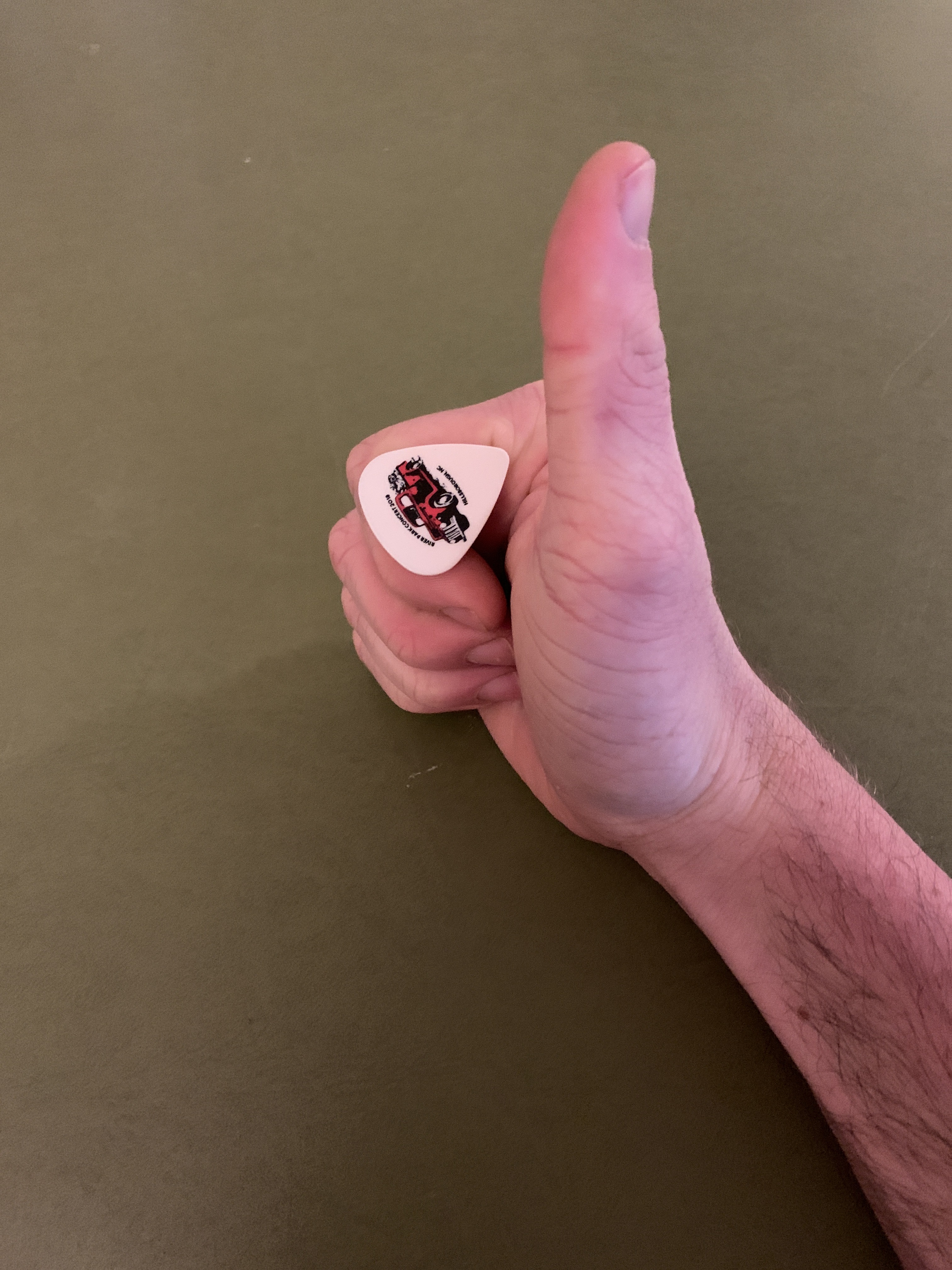
Here’s the best way to hold a mandolin pick: Form you picking hand into a soft fist with your thumb up. Place the pick on top of your index finger – point facing out. Rest your thumb on top of the pick.
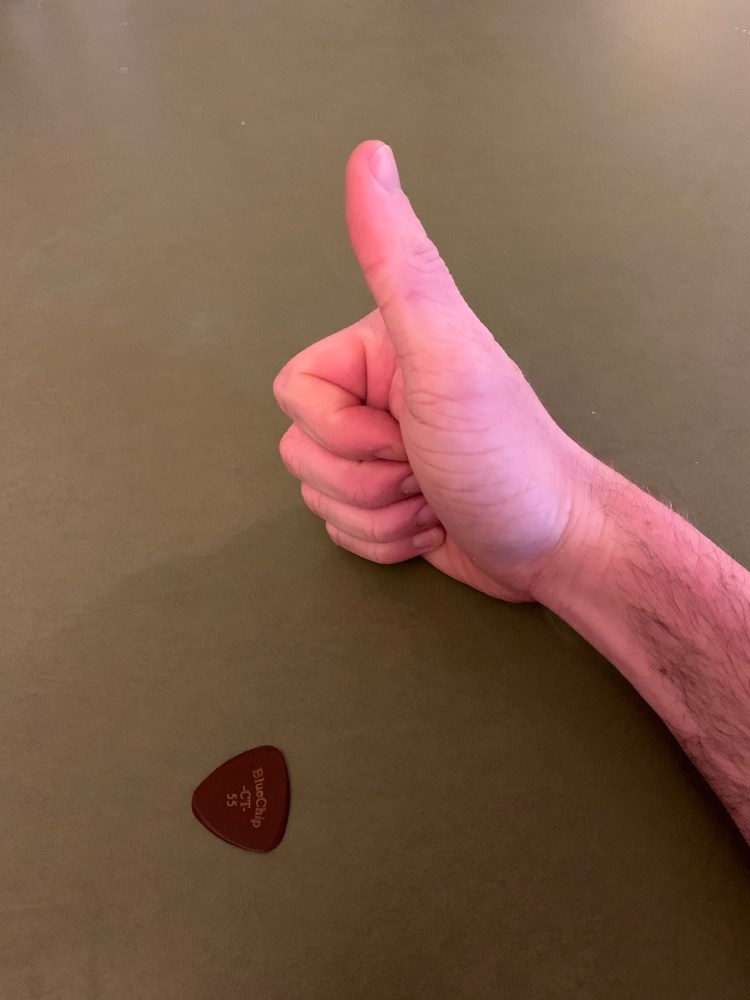

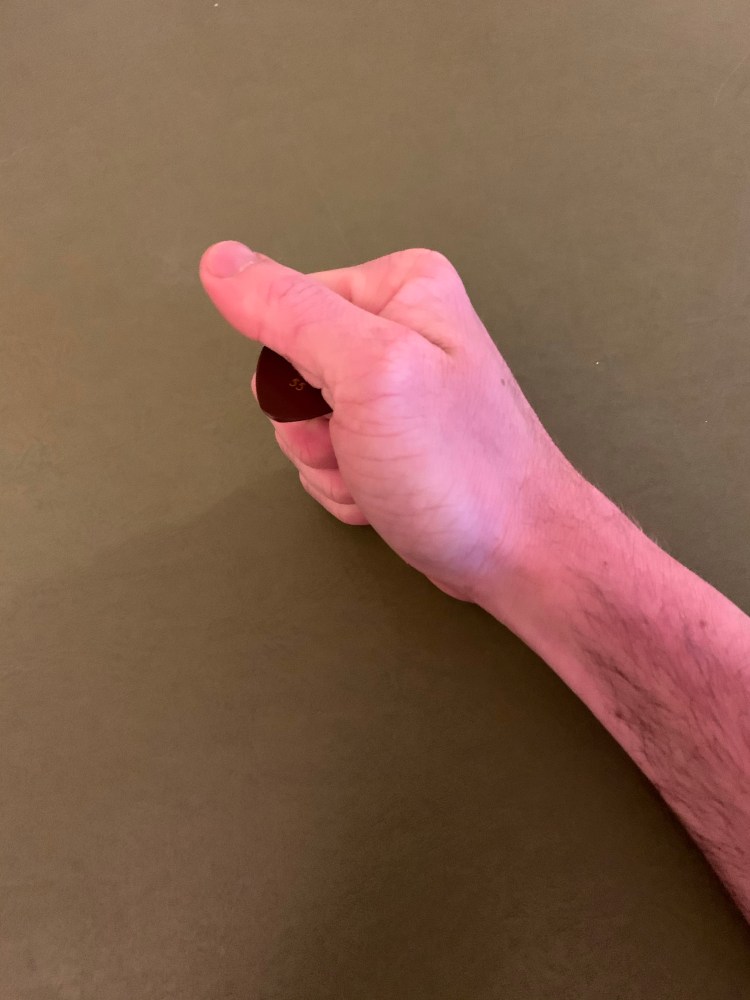
You’ll notice it is a little different than holding a pick for guitar. After all, this is mandolin, not guitar! You’re in charge of rhythm, melody, backup chords, and tremolo. This takes a lot of control. This is the tried and true method.
Now that you can hold the mandolin pick it’s time to do something with it.
Loosey Goosey
Playing a musical instrument is not too different than dancing. If you’re stiff, your execution is going to be awkward. That’s not what you want! Fixing this is all about practice and staying agile. Your hand needs to know what to do automatically and to not resist the musical flow.
Try out this exercise to facilitate a comfortable picking motion:
Exercise:
Holding your pick correctly, keep your wrist loose, and sway it up and down. Imagine your wrist as separate from your thumb and index finger. It takes minimal effort, but it is going to be so helpful to your playing.
After you’ve done that for a while, with your loose, swinging hand practice tightening and relaxing your fist around the pick. Tighten your whole fist and alternate with a relaxed grip. Remember to keep your wrist loose the whole time.
It may be tricky at first, but soon you’ll be able to easily operate your fingers apart from your wrist joint. While you may not play with this exact motion, it’s a great drill and you can do it anywhere! Plus, it ties great into our next theme.
Volume Control
If you’ve ever studied a sheet of music, you’ve noticed the p’s, pp’s and f’s, ff’s above parts of the score. These symbols let the musician know the volume to play during the tune. The p stands for piano (quiet), pp for pianissimo (quieter), f (loud), and ff (louder).
For stringed instruments, common reasoning is to just hit the strings harder for f’s and softer for the p’s. But you lose so much control if the only way to play with volume is bashing in on your strings. There’s a subtler way to adjust your volume, putting you at the helm.
Grasp your pick tighter for f’s and softer for p’s. This will bring you more control between tempo and volume. It’s that basic. The tighter fist you make, the more pressure you’re applying to your strings, the looser you hold the pick, the softer. There’s so much room for varied volumes. The varied volume makes music interesting to listen to and to play. After all, it gets old just playing loud or just playing softly. Without changing the rhythm of your wrist you can change the sound of your instrument.
Your pick provides the spice of life. Or at least to your music! What’s the difference? Here’s an exercise to lock this in:
Exercise:
On your top sting hold your pick loosely, pluck the string, notice the volume. Now grip the pick a little tighter, pluck, notice the volume. See how many different volumes you can make. Keep in mind that the goal is to strike the string with the same force each time, and rely on the volume to come from the grip on your pick.
Crescendo and decrescendo your playing – keeping the beat steady by tapping your foot. How softly can you play? How loudly? On your downstrokes play loud and on your upstrokes play soft. See how many ways you can incorporate volume adjustments into your playing. It is such a versatile technique and will really set you apart from anyone who hasn’t mastered this.
Quiet, loud, and in between are great, but now let’s make sure each of those notes sounds flawless.
Mastering Tone
Mandolins are built for speed, I tend to call my mandolin the “shred-sled”. But it isn’t always about how many notes you play in a measure. The ear is much more interested in the quality of those notes.
To facilitate this, the pick shouldn’t be heard when you’re playing. You only want the strings to make the sound. This creates the crisp, silky tone we all crave. In order to do this, you’ll want as little of the pick to touch the strings as possible. To achieve this, angle the pick forward slightly so that the edge of the pick makes contact with the string, not the flat side. Practice this by on each of your open strings. Test the difference between angling your pick and letting it fall flat. You’ll hear the difference.
That’s how your pick should make contact with the strings initially, but it literally shouldn’t stop there. Just like anything, following through is key. It’s not just “hit the string and once it makes a noise you don’t care anymore”. Following through after the pick makes contact will give you a better tone as well as keep you on the beat.
Whether an upstroke or a downstroke put an emphasis on stroke. Allow the pluck to be a sweep – not a hesitant falter. Your pick should scoop through the double set of strings and keep going, arching back up over the strings for a downstroke or swinging back to meet the string for an upstroke.
Provided next is an exercise to give you the best picking tone.
Exercise:
This is a fun exercise to improve your tone. If you’re the bashful type, you may want to get somewhere you’re alone.
Here it goes: Strum all of the open strings, just like an extravagant hair metal guitarist. Strum all the way down, take a wide windmill back up to the top of your arch, and go again; reach all the way up in this windmill. Now that’s follow-through.
Try this for each of your individual open strings. Remember to angle your pick so just the edge is scooping through the strings. Tune into the tone of your strum. Can you hear the pick or just the sweet shimmer of the strings?
Now try this for each individual string. No need to press any notes down, keep the strings open. Don’t move through this quickly. Take your time to make each pluck or strum the clearest it can be.
Choosing a pick
The most important thing to do is practice technique because it’ll always make your playing better. But having the correct tools is a close second. That’s why the pick you use matters.
Mandolinists don’t use guitar picks. They’re too light and small and will make your playing sound tinny and weak. Instead, mando players use thick, quarter-sized picks. There are plastic, ebony, wood, glass, and scientifically engineered synthetic picks. Each gives your mandolin a special reverberation.
You can easily find these at your local guitar shop or online. I’m sure your local guitar shop has a website ;).
I like to keep a few picks in my pocket, or on the table whenever I play. It gives my playing a different character.
I saved up my money and bought a BlueChip pick. They’re not cheap, but they sound great. It was a few bucks more to get it engraved so I did that – go big or go home! Luckily I haven’t lost it yet.
I also keep a bag of Golden Gate picks in my case. They’re cheap and reliable. I especially like to use them on songs I strum and chop on.
No need to break the bank, but go ahead pick up some picks as I described. Notice the difference in picks you play. Whenever I’m at a guitar shop I try out their picks just like I try out their instruments.

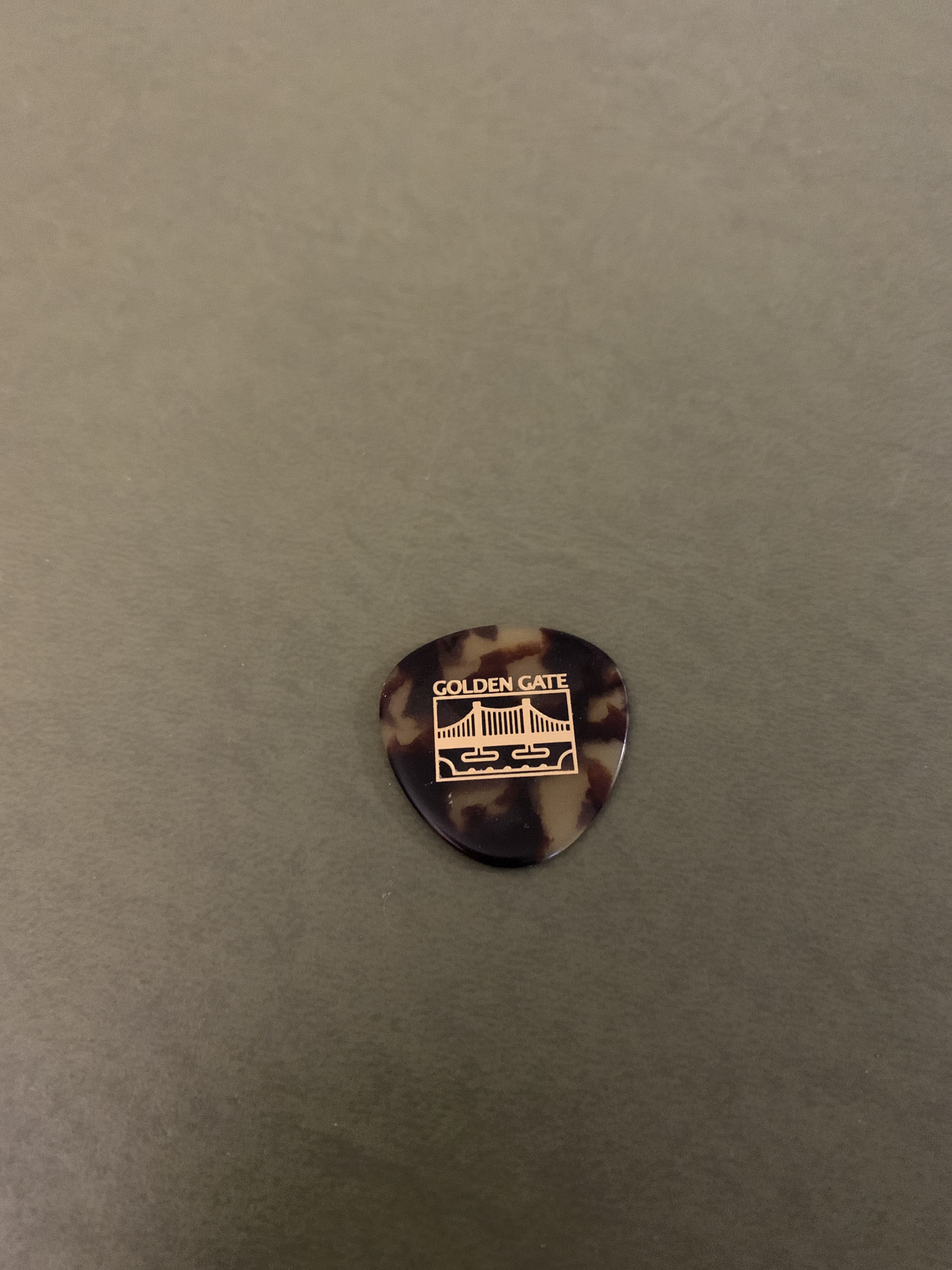
Tip: If you only have a guitar pick to use, go ahead and flip that sucker around and play from the rounded edge.
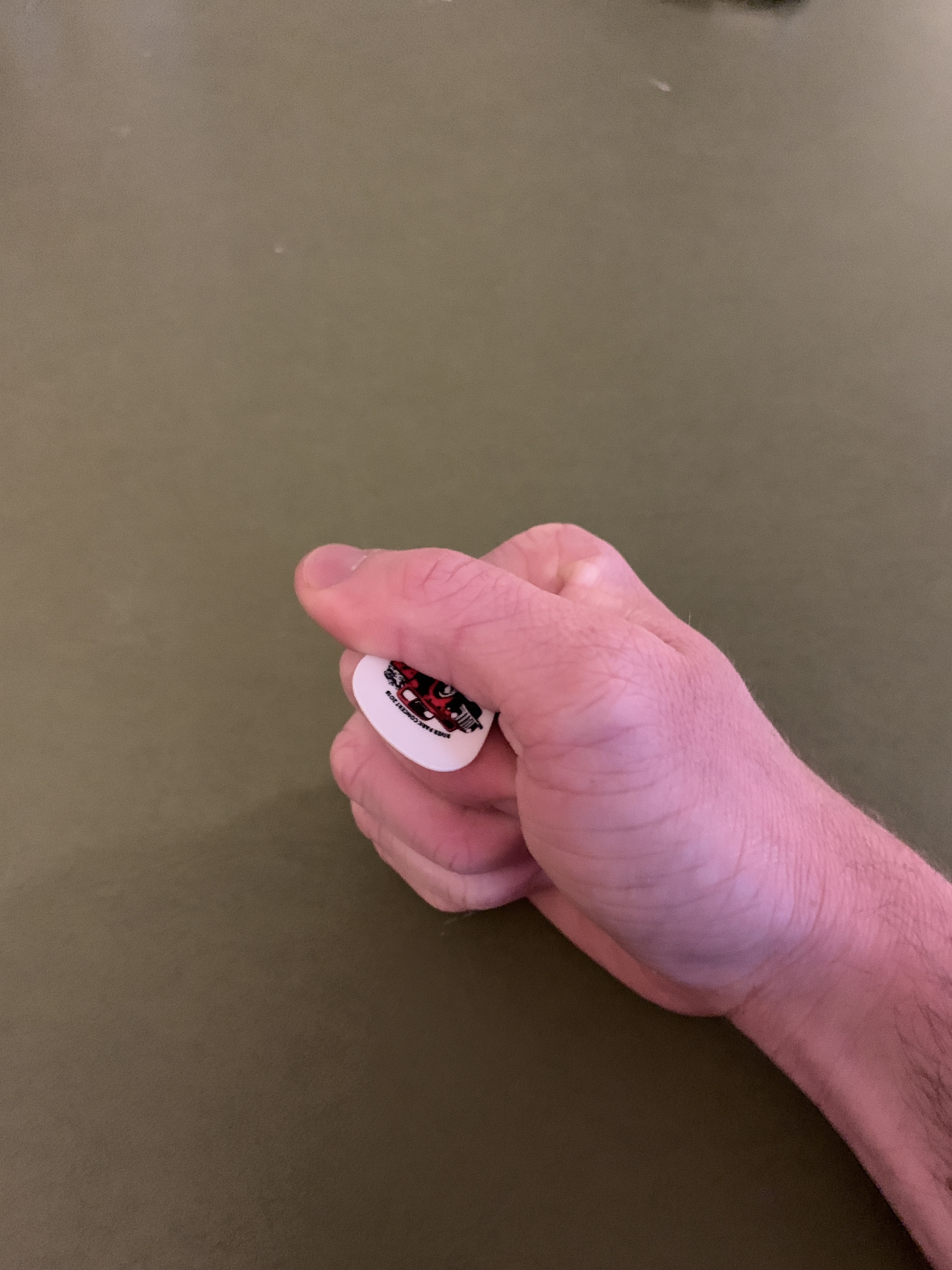
Wrapping it up
Your picking hand is so important to who you are as a player. It provides the sound quality, volume, and rhythm. Nurture your technique. Hold your pick like a mandolin player, between your thumb and index in a comfortable fist. Angle the pick just so and always be experimenting with your sound! Happy picking.
 MandoZen