The LR Baggs Radius is a great mandolin pickup, especially for the gigging player. It combines the functionality of a piezo with the sound quality of a microphone. The installation takes just about as long as taking the pickup out of its packaging. There’s no drilling required, so if you want to take it off or move it to a new instrument you’re free to do so.
I’m not sponsored by LR Baggs. I’m not getting any kickback for promoting them. I’m just a mandolin player who has struggled with the sound amplified playing produces. There is a K&K pickup that came included in my preowned mandolin. I used it for years because it worked. However, it doesn’t deliver the clear punch that I’ve found the Radius does.
The K&K sounds, well, amplified. Kind of harsh, bright, and uneven. I love the natural mandolin sound, so I strive to get as close to that as I can. Unhindered by cables and electronics, a mandolin is as free as can be. ATP transfers flawlessly to muscles and to strings. Air swirls within the body, pattered into sonic waves, swooshing out to find ears. Organic, simple, not more sophisticated than singing or clapping hands. That’s the sound right there.
Wireless and unamplified, you can perform at every infinite corner of the round world. But only a radius around you will interest listeners. Studies have found this radius approximately 18.5 feet (5.6 m). That’s good and fine for a campfire jam, but it’s not going to fly when you’re commissioned to entertain a chatty coffee shop. Not to mention alongside a heavy-handed banjo player.
Graciously, we live in an electronic age. We no longer rely on an audience of cupped ears nor ingenious architecture to project instruments beyond natural volume. Inexpensive, masterfully designed pickups can boost even the itsy bitsy mandolin above drum beats and shouting bar-goers.
Plenty of mandolin pickups exist. Ones that use a microphone clipped to the soundhole, others snugged inside the instrument by means of surgery. LR Baggs has patented a smart design, inconspicuous, and natural which can be attached and reattached to any mandolin with putty and a few twists.
Design
A coated copper wire connects the sound capturing device (transducer) to an input jack with a clamp to tighten onto your instrument. It’s a passive pickup, meaning there are no batteries required, but it is going to rely on your amp for oomph.

The transducer is of a different design than most pickups. It can’t be described as a piezo which turns the vibrations of the instrument into digital sound waves, nor a traditional mic which amplifies soundwaves. The transducer uses microphone technology in ways like a piezo so that it can pick up subtle sounds, all while keeping quiet when no playing is being done. The result is a sound very similar to unamplified picking.
It is a very simple design. That’s all you’ll need – except it can’t control volume. I suggest combining the Radius with a preamp so that you can control sound levels and the volume. The owner’s manual advises using a preamp with a “minimum input impedance of 2.2 meg.” I use the LR Baggs preamp for this. I like to pair my equipment with other things from the same company for compatibility sake.
Attaching the jack to your mandolin
If you are going to use the clamp to attach the jack to your mandolin you’re going to want to place it just under the tailpiece. This way it will be out of the way of your picking hand. The clamp works the same way as an armrest’s clamp.

If you’re not going to use the clamp, you’re in the minority like me. My Weber Gallatin has soft edges which make the Radius’s jack clamps difficult to connect to. I’ve run into this same problem with armrests too. The Gallatin is a great instrument though. I’d rather make accessories work for it than trading the instrument for a different model.
I also think it can be annoying to have a jack hanging off my mandolin. Even if my mandolin had straighter edges I’d be nervous that during a show I would accidentally knock it off and then everything would feedback and no one would have a good time.
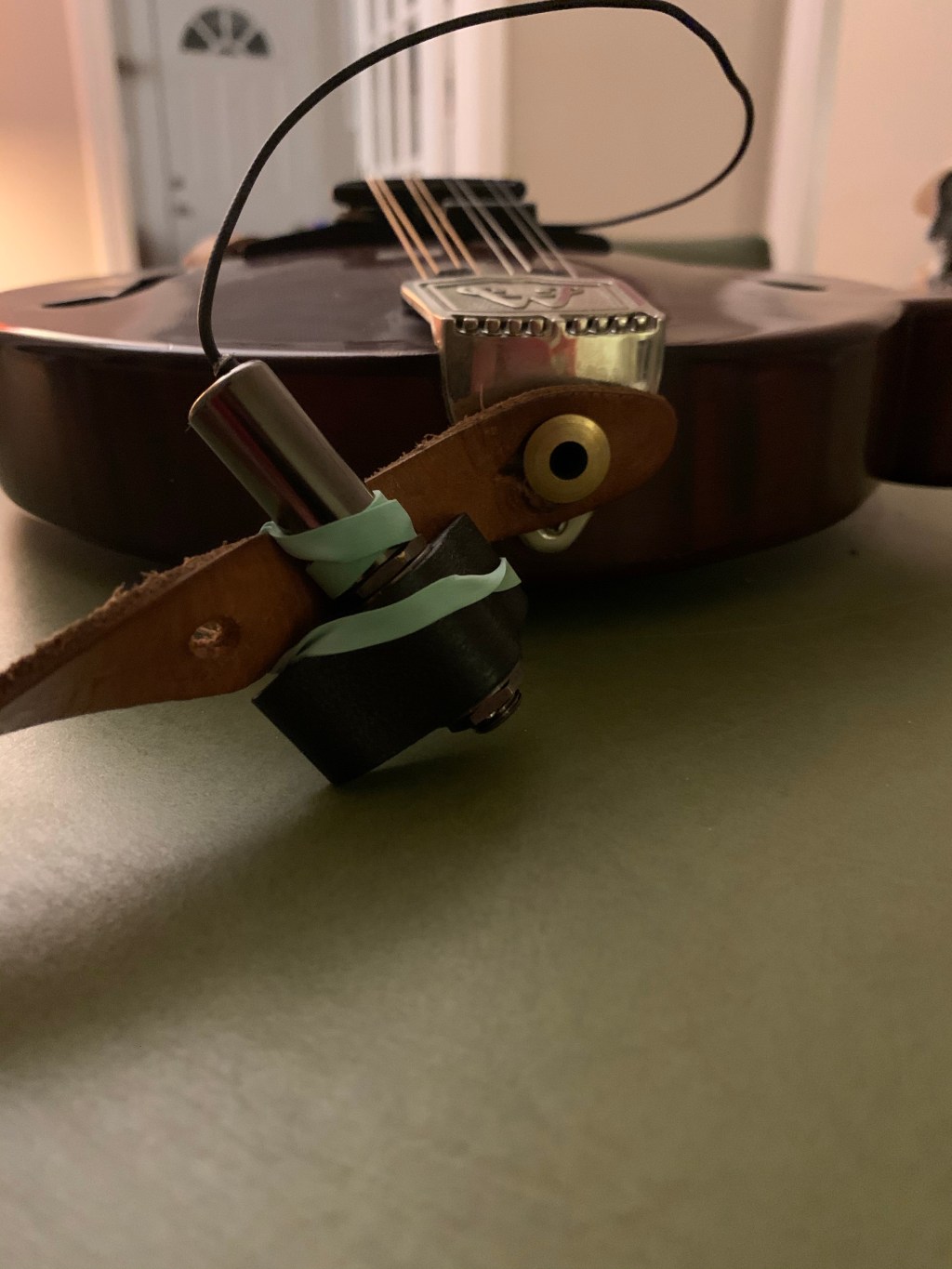
This is how I connect the jack to my mandolin, in all its glory:

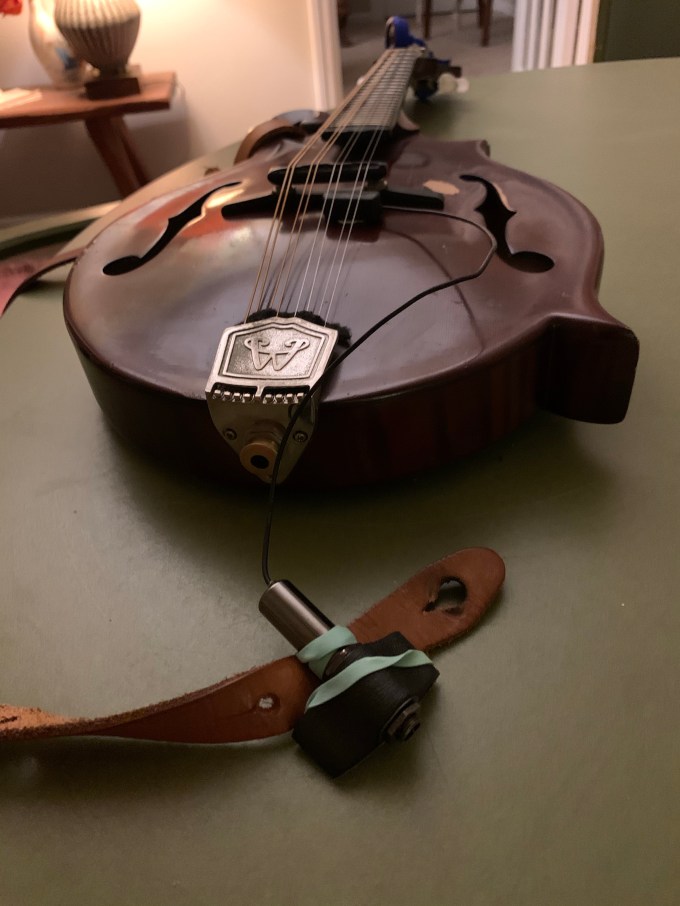
All I did was unscrew the clamp from the jack holder and secured the jack around my strap with a rubber band. Maybe ingenious, definitely janky. It works though! I just set it up so that I don’t touch the cable when I’m picking. 😉
You could also just bring your mandolin and pickup to a guitar shop so they can install the jack into your mandolin. This can be a great option for you, but I do like the versatility of removing the pickup when I want to.
Placing the sound transducer
In the Sierra Hull video highlighting the Radius, she places the transducer vertical to the bridge. Maybe this is what will work best for your instrument too. Perhaps not. Play around with the position of the transducer. It all depends on what type of sound you want to produce and what your instrument requires.

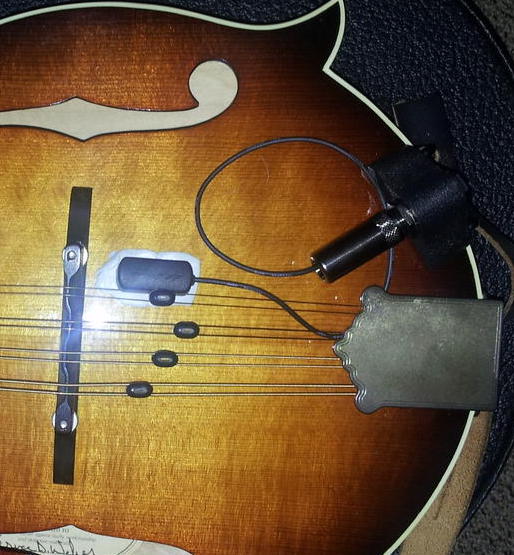
The manual suggests placing the pickup nearer to the treble side of the strings (the A and E strings), behind the bridge as below:

You’ll notice that above the transducer is placed horizontally to the pickup. Just play around with the position. A good idea is to begin using the white putty as the adhesive for the transducer. It won’t mess up the finish on your mandolin as you adjust where the transducer is positioned. If you find a place that is perfect for the sound you want, perhaps you can use the stickier, tape adhesives you’ll find in the box. I haven’t found any need to do that though. The putty works fine. You’ll have to replace the putty at some point, so keep some extra in your case.
Picking up the slack
There is going to be some extra slack in the wire between the jack and the transducer. You can cut it if you want and then resolder it, but why not just curl it up and out of the way? There’s really no need to do any electrical work. What I find so charming about the radius is how easy it is to work with – no professional help needed.
Conclusion
When it comes to a natural, responsive mandolin pickup that will capture the true acoustic quality of your instrument the LR Baggs Radius is a great choice. It’s easy to install, uses innovative technology, and you won’t notice it when you’re playing. I recommend it. Happy picking!
 MandoZen