There aren’t many more complicated instruments than the mandolin. It only has four strings! Sure, they’re doubled, but that’s just an illusion of complexity. The mandolin is designed to be easy to play. There’s no need to learn how to bow like a violin, which from what I’ve heard is not second nature. You don’t have to worry about 6 strings like a guitar. You just have the 4 string tones to pluck: GDAE.
With how the mandolin is set up, you can play just about every natural major chord, and most of the natural minor chords, with only two fingers. You just need your index and middle finger, index and ring finger, or index and pinkie. Once you become comfortable with these fingerings, you will be able to play the chords for just about every pop song or fiddle tune imaginable. Let’s check out how to do this.
What are the 2 finger chords?
The most basic progression on the mandolin is C, F, G. If you ever played guitar, you’ll be happy to know that the F chord is not the hardest chord to play on every instrument! In fact, it’s no more difficult than the C or the G. That’s because each requires the same finger formation. You can keep your index on one of the string’s second fret, and your middle finger on the third fret of the string below and you’ll produce one of the three chords. Even better yet, these three chords will allow you to play so many popular songs! It’s one of the most famous chord progressions out there. These three chords will get you far. Let’s explore them now!
Place your index finger on the second fret of the D string and middle finger on the third fret of the A string. You want the tips of your fingers on the strings, close to the higher frets, not touching any other strings, and crimped around the neck like your holding a ball. This will put your fingers in the strongest positions, lessening string buzz. Strum down all of the strings.
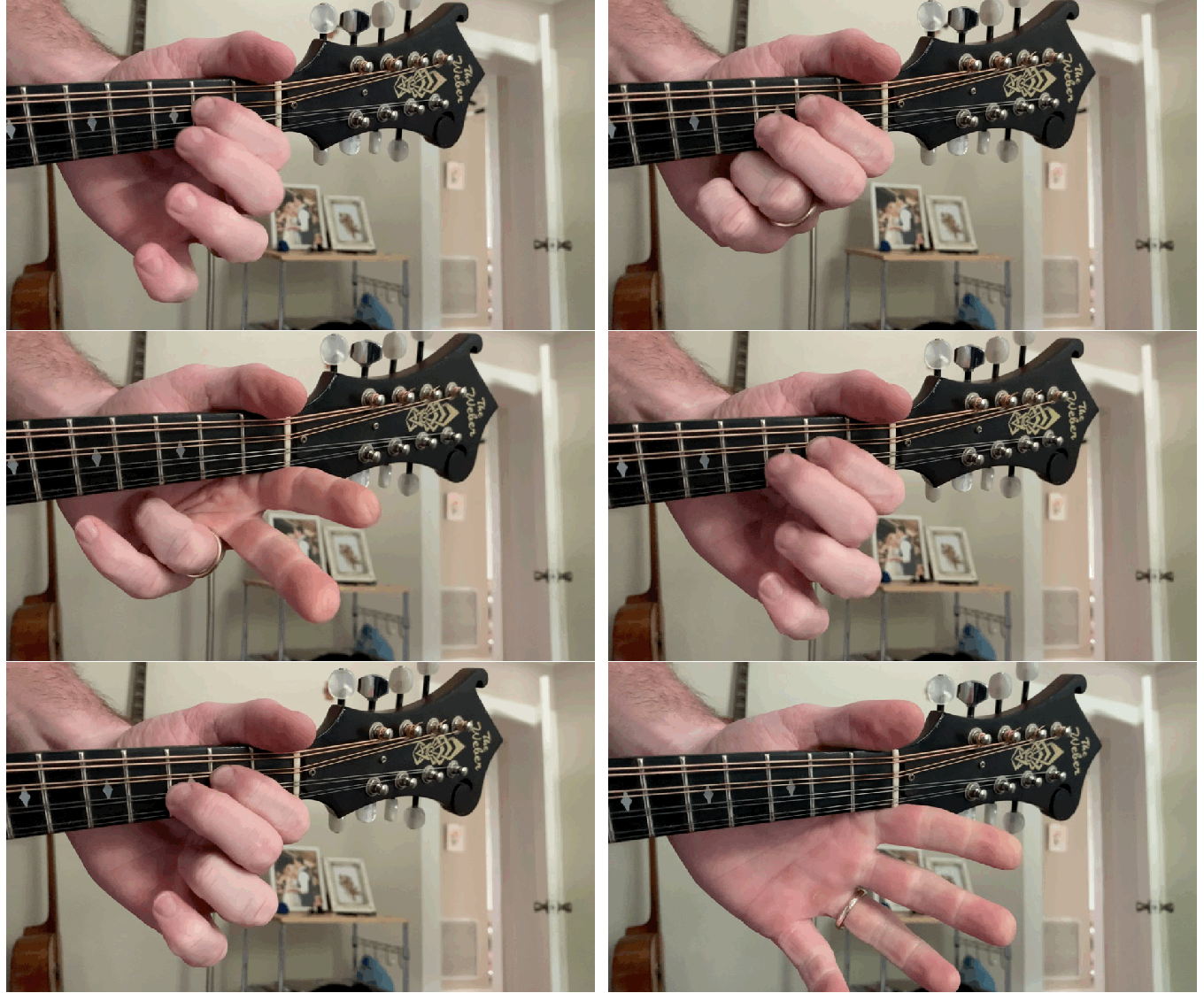
There you have the C chord. I hope you’re feeling like a rockstar! But one chord can get boring – music is all about resolve and tension; tension and resolve. Let’s add some tension. In the same shape your fingers are in – index on the second fret, middle on third, place your fingers one string set up. Now your index finger will be on the fattest set of strings, the G strings, and your middle will be on the D. Keep your fingers strong. Strum all four sets of strings. That’s an F major 7th chord. Fancy chord name, but it’s easy. Now you have added some tension.
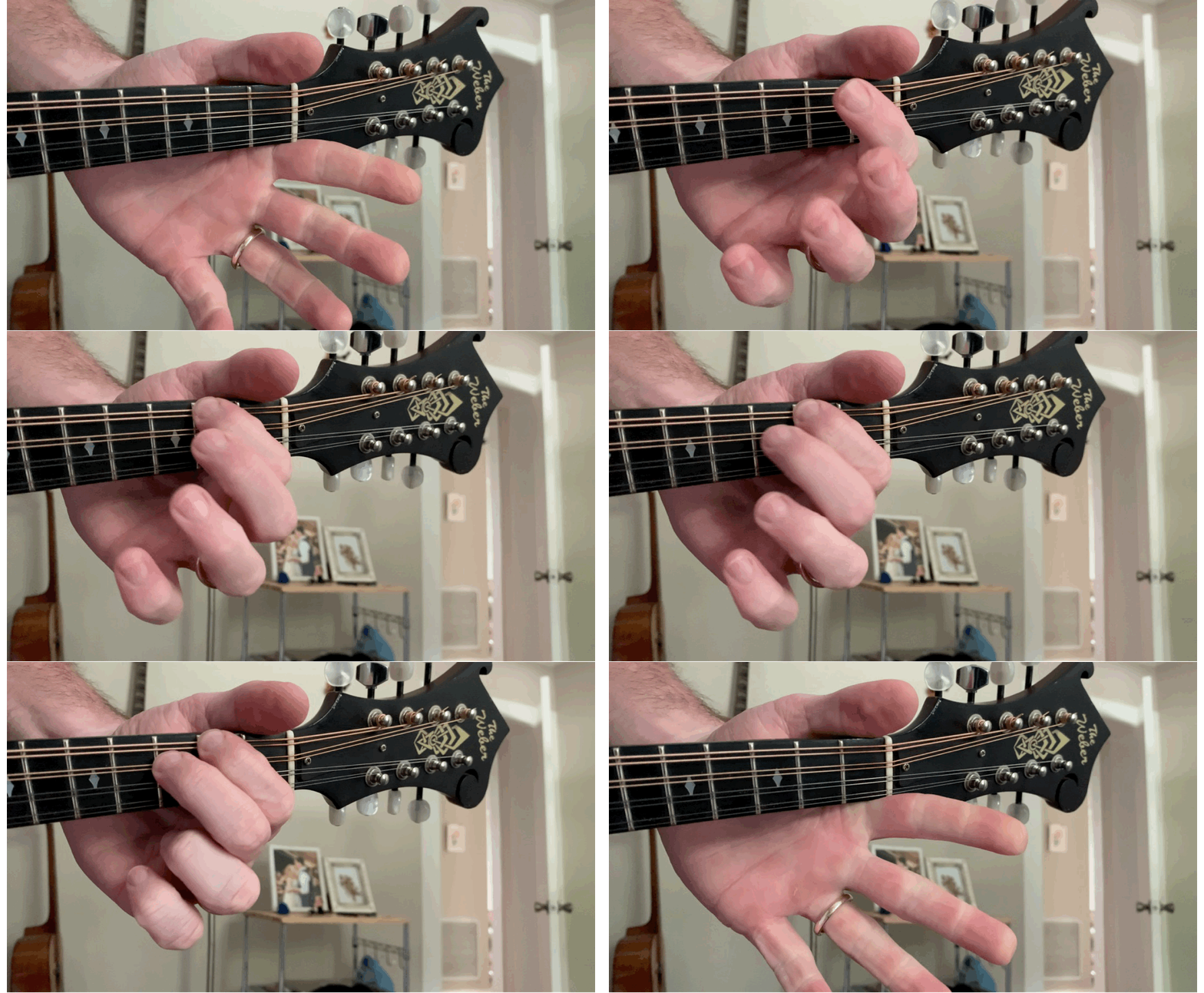
The sound wants to go somewhere. We could resolve it right away by returning to the C chord because that’s home when we’re in the key of C. But instead we’ll hold off on the resolve. Let’s add another flavor; the G chord.
Keep those fingers in the same formation as the C and F major 7, but now put your index on the second fret of the A strings and your middle on the third fret of the skinniest string set, E. Once again, strum all 4 sets of strings. That’s the G chord. it will sound awesome after your F major 7th chord.
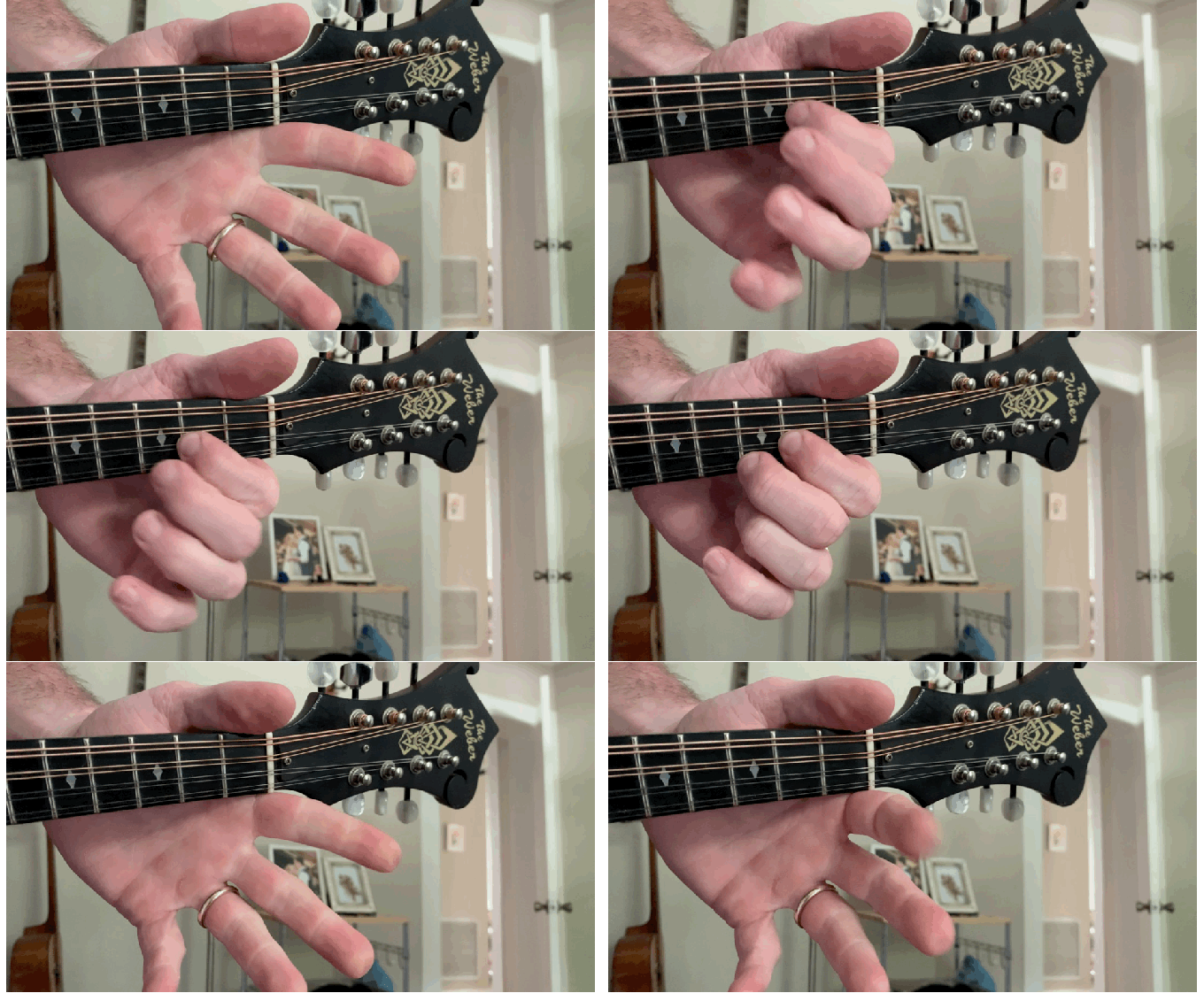
To start the progression over again, play the C another round. That’s all there is to it! You can play a 1, 4, 5 chord progression in the key of C. All of that without switching the formation of your fingers!
C is only one key out of the 12 major keys. Learning to play in each of those keys is going to help you tremendously as a mandolin player.
Keys are kind of like meals of the day: Breakfast, lunch, and dinner. Within those meals, particular dishes belong. Pancakes = breakfast, sandwiches = lunch, salmon and kale salad = dinner.
There’s no law against having these meals outside of their typical meal times, but some dishes are strange to have during meals (ie ice cream for breakfast). It’s the same how in the key of C, the C, F, and G chords are typically served. An A major, for instance, would be odd. Let’s check out which keys are served with which chords!
Other 1 – 4 – 5 Chord Progressions
1 – 4 – 5 is the chord progression which allows us to play the famous Ritchie Valens turn La Bamba. Keep it slow at first, while you’re learning to position your fingers in the correct places, but as you become more comfortable, try to make the chords sound like La Bamba. It’s a fun tune to play, and later on, you’ll learn to improvise over the song.
Here’s how the basic strumming pattern goes:
1: Down, down
4: Down, down
5: Down, rest, down, rest
Try that with the chords we’ve already learned in the key of C.
Key: C
| 1 | 4 | 5 |
| C | F | G |
 |  |  |
Tip: In order to really lock in these chord shapes try placing your fingers in the chord position and then remove your fingers. Wiggle your fingers around, stretch them out, and then return them to the positions of the chord. This will help make your fingers go to the chord shapes like second nature.
Key: G
| 1 | 4 | 5 |
| G | C | D |
| |  |
Familiar, huh? You already know the two first two chords. The final chord breaks the finger shapes you’re used to. The D chord is a very common chord. Your index will go on the second fret of the G string, your middle finger on the second fret of the E. Once you have your fingers situated, remove them from the strings and replace them in the D formation. Go ahead and strumming La Bamba in this new key. What do you notice about playing the same song in a new key? What differences? What similarities?
Key: D
| 1 | 4 | 5 |
| D | G | A |
 | |  |
Here again, we have two familiar chords and one new shape. We’ve been using only our index and middle fingers for the past chords, but with the A we’ll have to engage our pinkie – it’s too far for your index to reach. Place your index on the second fret of the D and your pinkie on the sixth fret of the G. Pinkies aren’t naturally as strong as your other fingers, but with practice, you’ll be able to use it just as you would any other finger!
Become more accustomed to the A chord and then try our La Bamba in the key of D.
Key: A
| 1 | 4 | 5 |
| A | D | E |
 |  |  |
You know these first two chords! But what about that next one? No problem at all! The E uses your index and middle finger. Just place your index on the second fret of the D string and your middle on the fourth fret of the G. Strum down all of the strings and you will have played the E chord! Technically this is an Esus4, but it’ll sound just fine.
This progression has a lot of moving parts, so take your time adjusting your fingers while you strum La Bamba.
Key: F
| 1 | 4 | 5 |
| F | Bb | C |
 |  | |
There’s a reason this key was saved for last. It’s trickier than the other keys we’ve gone over. Of course, the first and final chords aren’t to fret over. But the B flat? There are three strings we need to press down on. Here’s how to engage these three strings with two fingers.
Instead of pressing down on the strings with the tip of your finger, you’ll lay your index finger on top of the A and E strings on the first fret. Where your fingerprint is, is where you’ll press down on the strings. This is similar to a barre chord on a guitar, but instead of using your thumb to clamp down on the back of the neck as you would on guitar, you’ll just keep your hand as you would for any other chord. This will all become natural with practice.

Then with your ring finger, place it on the third fret of the G string. Be sure to involve the tip of your ring finger here, and try not to touch the D string. You want it to remain open.
It’s a lot to think about, but soon you won’t even remember not being able to play this type of chord! No need to become frustrated, just release your fingers from their formation, wiggle them out, exhale, inhale, and reposition your fingers into a Bb. That’s it, you’ve got it.
Feeling sort of comfortable? Try La Bamba in the key of F. No need to rush through it. Make those chords sound as crisp as possible.
Patterns Emerge
I know when I first heard about the number system (ie 1,4,5), it didn’t seem very valuable. My goal was simply to learn, remember, and create a clean sound for chords on my mandolin. Really, that is the most important thing when you’re first learning chords, but keep the number system in the back of your mind. Notice what similarities there are between the 1, 4, and 5 chords in each of the keys.
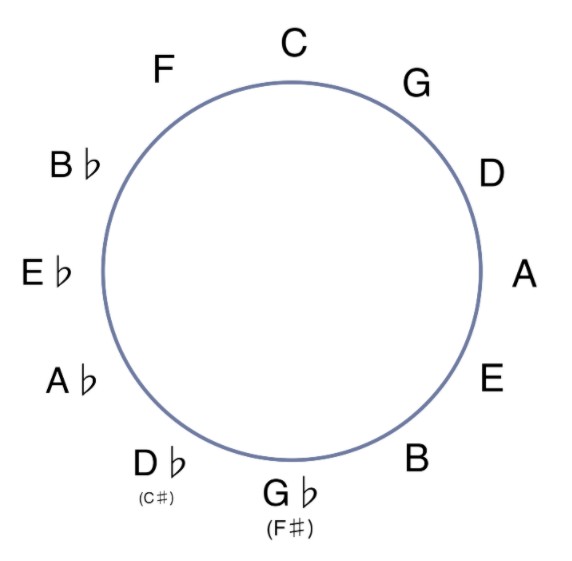
Check out the Circle of Fifths. This is a common tool to learn about about western music. How does the 1, 4, 5 chord progression fit into the circle of fifths? What pattern do you notice? We will discover more about is tool in the future.
That’s all there is to it! You can now play mandolin in five keys and know seven new chords, all just using two fingers at a time. There are so many more chords to learn on the mandolin, and we’ll get into those in other posts. But if you can master these keys and chords, you’ll be able to jam along to so many songs.
 MandoZen