
The framework for all music is built from scales. From them, chords are formed, keys are established, licks are plucked. The possible scales, combinations of notes, stretches on relentlessly on. That’s why there’s no end in sight for new music to be composed.
Each culture has their own scales, and these scales give the culture’s tunes their specific accent. Japanese hōgaku music is built from a different scale than Czechoslovakian polka.
Scales evoke emotion. Minor scales are serious and impassioned. Locrian is ambiguous. These provocations are what turn noise to music. It’s why we play mandolin.
Thankfully, scales are like the color wheel. The choices are cosmic, but you can get by fine only knowing a few. In this lesson we’ll discover the red, yellow, green, and blue of scales. These are the scales which, with only the limit of your imagination, and following a few rules, you’ll be able to play along to just about anything.
Note:
We’re going to be focusing on the key of D for these scales. The tabs will be provided for that key. To try them out in other keys, the internet beyond is a fantastic resource.
Pentatonic
Here’s the vanilla ice cream of scales – not to say it’s boring! It’s a magical scale. Just play in time, and with the correct key, and everything you pluck will sound pure and reasonable. It goes with everything.
It’s easy to figure out the notes of the pentatonic scale by examining the circle of fifths. Pick the note that the key is in, for instance C: C, D, E, G, A. G’s pentatonic scale is G, A, B, D, E. Do you see the pattern? You may do this for all the rest of the notes too to find the pentatonic.

Here are the tabs for the D pentatonic:
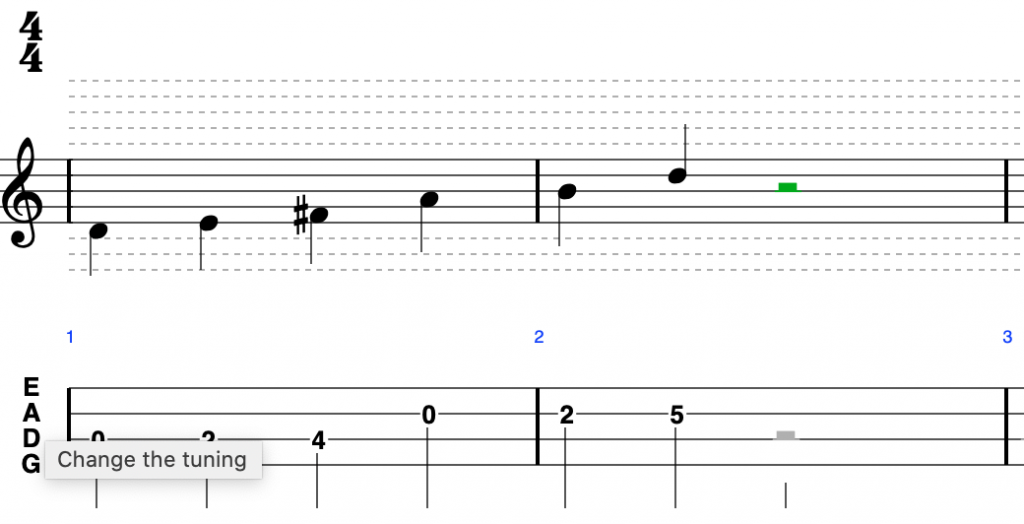
Play through this, it is the first full pentatonic scale on your mandolin’s neck.

The notes above show all of the D pentatonic notes on the first position of your neck. This means that all these notes are fair game to use in a song that is in the key of D.
Pluck through that a few times. Now, pull up the song in How to Play Melody Between Chords. Try making up some riffs – basically as long as you stay in time and use only the notes in the scale above you’ll sound great!
The pentatonic scale is the most simple of scales. But with creativity you’ll be able to string these notes together in new and inventive ways.
Think about how all of the notes of the pentatonic scale blend so well into any song. What does that mean? The emotion behind the scale is plain. Sure, it’ll sound great almost all of the time. You won’t have to worry about any notes sounding out of place. But in order to take your solos and licks to the next level, you’ll have to let in some dissonance. That’s what we’ll explore in the next scales.
Blues
Blues, what better hamlet to explore the sensitivity of music. This is a fantastic scale to have in your back pocket. It has an additional note that’s not typically found in the standard key of the song. The one additional note is, essentially, the blues of the blues scale.
Here is the blues scale in D:


Not every song is home for the blues scale, in fact most are not. It is a scale to use diplomatically. Applied reasonably, it is sure to pleasantly nudge ears off balance; impassive audience’s attention regained.
Major
The major scale, identical to the Ionian mode, is the Sound of Music scale:

Seven unique notes and an octave for repetition. The notes that don’t also fall into the pentatonic scale give this scale density. It’s only two extra notes than the pentatonic, but that’s 30 precent more. Much more sound to work with.
Here is the D major scale:
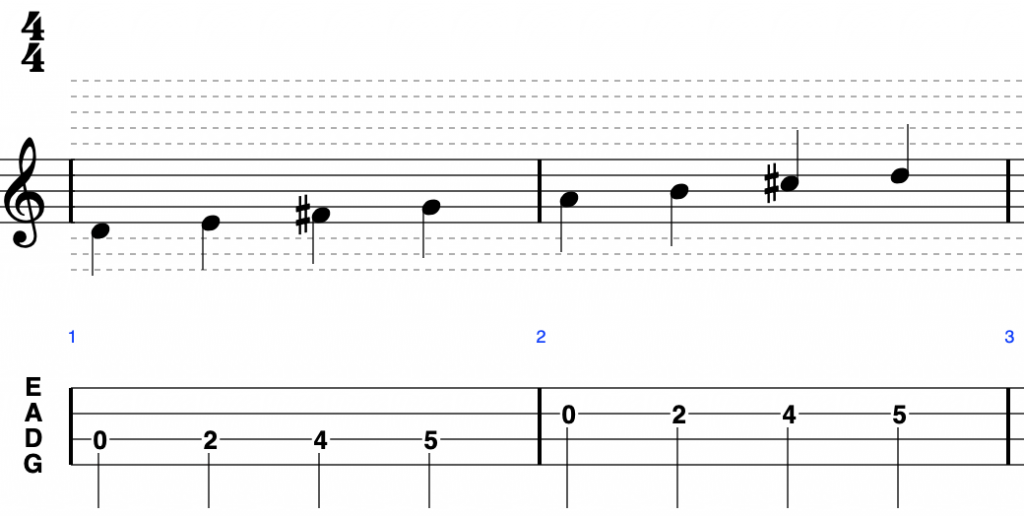

Go up and down the scale, slowly.
After you begin to memorize the pattern, try mixing it up as you did with the pentatonic. Notice how the additional notes sound. They won’t be as discordant as the blues scale’s added note, but there is some more tension.
This will be made more noticeable as you use to to play along to music. Turn again to the song in How to Play Melody Between Chords, or the other D major backing track on this page. Play a few riffs using the major scale, then only the notes of the pentatonic. Use the notes of the blues scale, then back to the major. Listen to how they all work, but have their own distinct flavor. This is the flavor that you’re providing the song.
Natural Minor
The natural minor or Aeolian Mode, is the same notes as the major scale, but the emphasis is on the relative minor. Check out this post to figure out a key’s relative minor. If you already know, let’s continue on.
What is meant by emphasis is where a scale resolves; where the tension is eased. For the purposes of the scale, the tension will build from the beginning and resolve with the final note an octave up. However, when you’re improvising with the scale, you’ll find your own ways to build tension and find resolution.
The relative minor for D is B. So, B natural minor is the scale we’ll use.
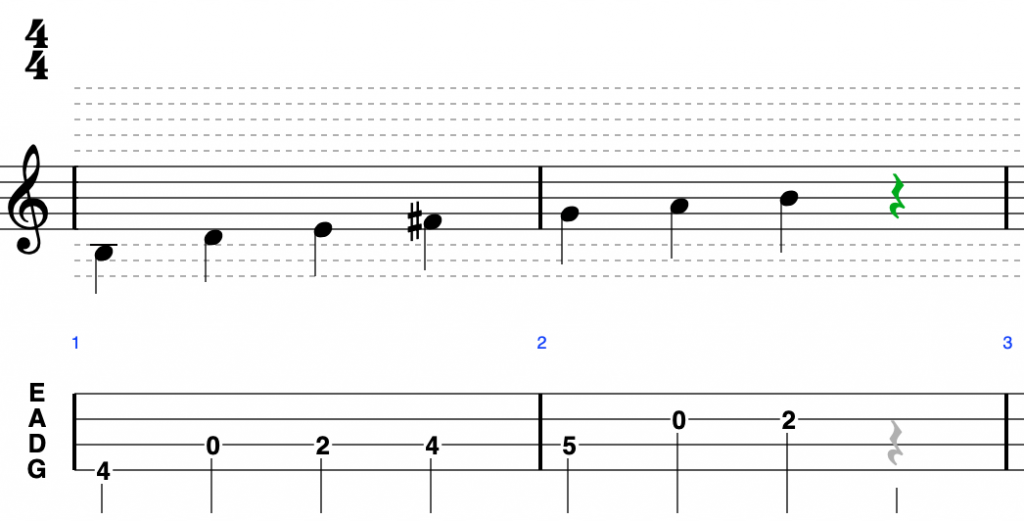

Do you notice the difference? It’s very interesting how even though both the major scale and natural minor have the same exact notes, the emotions they emit contrast so vastly.
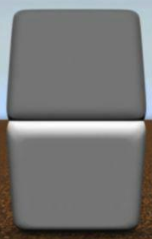
I think of it similar to this optical illusion above. The blocks seem like two shades of grey, right? Well, hold a pen or your finger between where the squares meet. How do the colors look now?
Harmonic Minor
This scale brings about a much more minor feeling than the natural minor does. This is because, compared to the natural minor, the note before the root note is brought up a half step.
With the B harmonic minor scale, this means that the A notes in the natural minor scale become A#s.
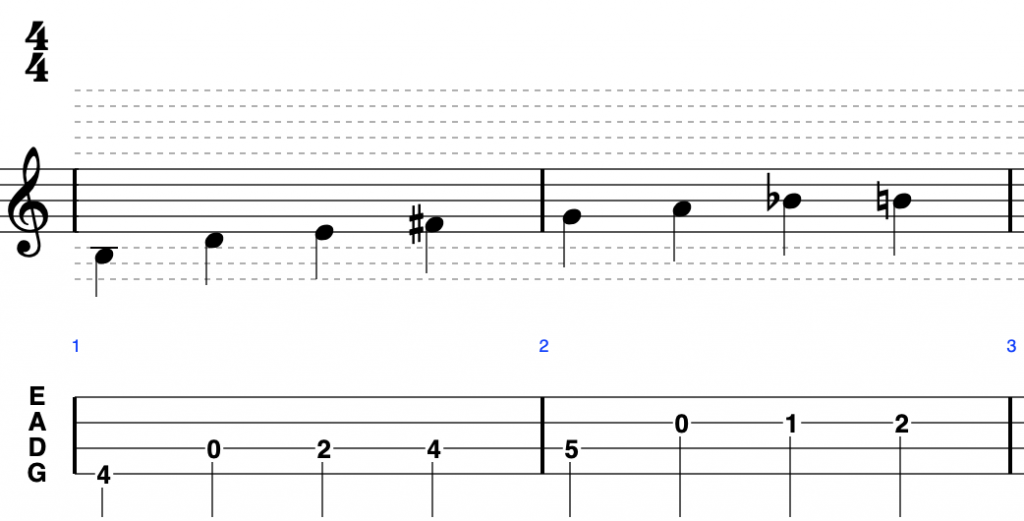
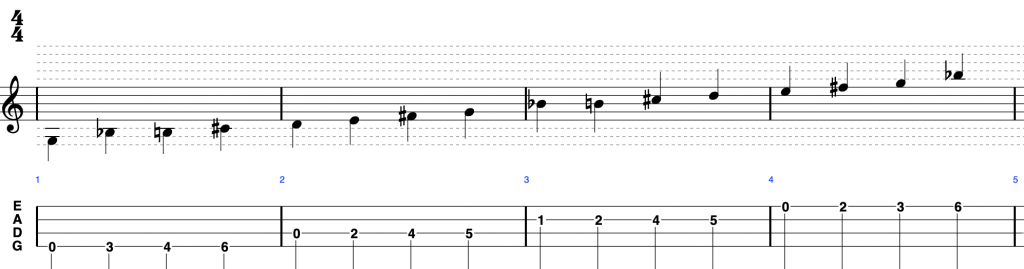
Try the notes of the scale over this backing track:
Take care memorizing these scale patterns, and you’ll be able to do so much with your mandolin. When it’s your time to solo, all you’ll need to do is play notes that fit within those scales and you’ll sound great.
Pentatonic is the safest scale. So if you find yourself riffing in some very strange territory with one of the other scales, or you hit some wrong notes completely, move back to the pentatonic and it’ll all seem like the wrong notes were on purpose. That’s what I do and what everyone else does too.
 MandoZen