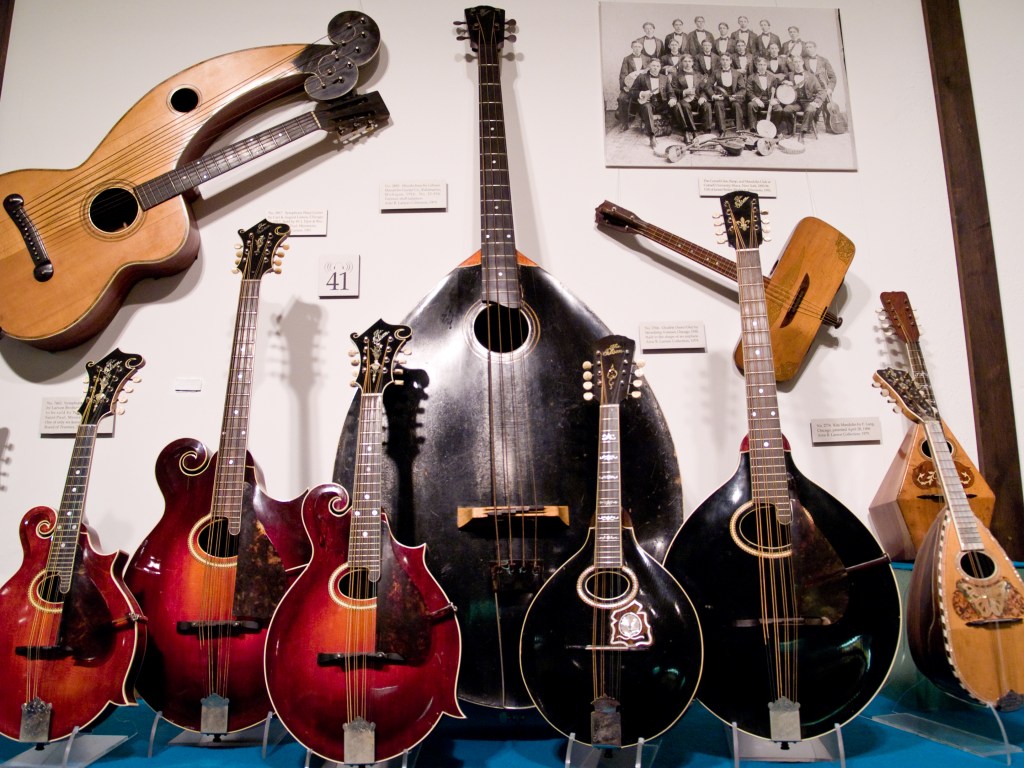
Are you ready to discover the world of mandolin-family instruments? From the bright, punchy sound of the mandolin to the rich, full sound of the mandocello and everything in between, these versatile and expressive instruments have been captivating musicians for centuries. And with different body styles, soundhole shapes, and even the option of electric amplification, there is a mandolin-family instrument to suit every musical preference.
So whether you’re a seasoned mandolin player looking to explore new horizons or a beginner just starting out on your musical journey, the mandolin family has something to offer. Keep reading to learn more about the different types of mandolins and their unique characteristics, and discover which one is right for you.
Body Styles
Bowl Back
There’s just something about bowl-backed mandolins that makes them truly special. With their unique, curvaceous bodies and rich, warm sound, these instruments are a far cry from the flat-backed mandolins of today.
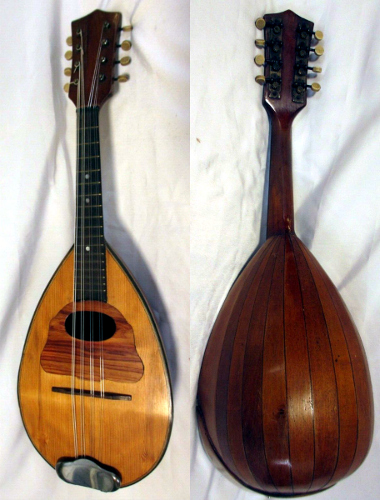
In fact, bowl-backed mandolins have a long and storied history, with roots dating back to the 19th and early 20th centuries. And it’s no wonder – the shape of these mandolins helps to amplify the sound of the strings, giving them a full, resonant tone that’s perfect for genres like folk and classical.
But don’t let their vintage vibes fool you – bowl-backed mandolins are still played just like any other mandolin, using a plectrum to strum the strings. And with models like the Neapolitan mandolin, the Roman mandolin, and the Lombard mandolin to choose from, there’s a bowl-backed mandolin out there for every player.
So if you’re looking for an instrument with a rich, warm sound and a touch of old-fashioned charm, a bowl-backed mandolin might just be the perfect fit.
A-Style
For those who crave a mandolin with a compact, streamlined body and a bright, punchy sound, look no further than the A-style. These mandolins are a favorite among players who appreciate their versatility – whether you’re into bluegrass, country, rock, or anything in between, there’s an A-style mandolin that will suit your style.
But don’t let their size fool you – these mandolins pack a serious punch when it comes to sound. Their bright, clear tones make them a great choice for solo playing, or for accompanying other instruments in an ensemble.
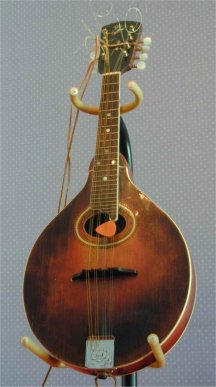
And when it comes to quality, you won’t find any better than the Gibson A-5, the Martin A-40, or the Gibson A-1. These mandolins are crafted with the utmost care and attention to detail, ensuring that they’ll sound great for years to come.
So if you’re in the market for a mandolin that’s small, nimble, and packed with punch, the A-style is the way to go.
F-style
When it comes to mandolins, there are few that can hold a candle to the majestic F-style. With its ornate body, this mandolin is truly a work of art.
But its beauty isn’t just skin deep – the shape of the F-style’s body gives it a warm, rich sound that simply cannot be matched by other mandolins. It’s the perfect instrument for those who crave a full, resonant tone that can stand up to any ensemble.
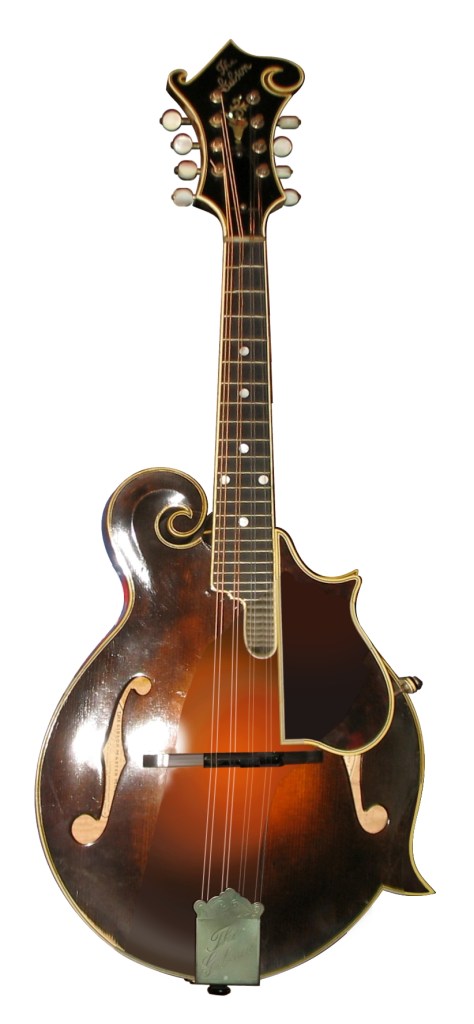
And while the F-style may be steeped in tradition, it’s no relic – these mandolins can be found in a variety of musical styles, from bluegrass to classical to rock.
If you’re in the market for a mandolin that’s both beautiful and bold, look no further than the F-style. And for the best of the best, consider models like the Gibson F-5, the Collings MF5, or the Eastman MD515 – each one is crafted with the utmost care and attention to detail.
Sound Holes
F-Hole
Mandolins, like many other stringed instruments, have f-holes, or sound holes, to help amplify the sound of the instrument. The f-holes are shaped like the letter “F” and are located on the top of the mandolin’s body.
The f-holes allow the sound waves produced by the mandolin’s strings to vibrate more freely, which helps to amplify the sound of the instrument. They also help to allow air to flow in and out of the mandolin’s body, which can affect the resonance and sustain of the instrument.
Mandolins with f-holes tend to have a louder and more resonant sound than mandolins without f-holes, which can be especially useful in large performance venues or recording studios. However, f-holes can also affect the overall appearance of the mandolin and may not be preferred by some players.
Oval-Hole
For those who want a mandolin with a sound that’s truly out of the ordinary, look no further than mandolins with oval soundholes. These unique instruments offer a balanced, full-bodied sound that can’t be found on mandolins with more traditional round or f-shaped soundholes.
But it’s not just about the sound – the oval shape of these mandolins’ soundholes gives them a visual appeal that’s all their own. These mandolins are truly one of a kind, standing out in any ensemble.
And with their warm, full-bodied sound, mandolins with oval soundholes are a great choice for solo playing or for accompanying other instruments. They can be found in a variety of musical styles, including folk, bluegrass, and classical, and are sure to add a touch of individuality to any performance.
The Mandolin Family
Mandolin
Ah, the mandolin – a truly unique and enchanting instrument. With its slender neck and delicate strings, the mandolin is a thing of beauty. But don’t let its small size fool you – this instrument packs a punch when it comes to sound.
Mandolins are tuned in fifths, with the strings arranged in pairs, similar to a violin. This gives them a bright, high-pitched sound that’s unlike anything you’ll hear from a guitar. And with a range of different types to choose from – including the A-style, with its punchy sound and compact body; the F-style, with its rich, warm tones and ornate body; and the bowl-backed, with its unique, curved shape and warm sound – there’s a mandolin out there for every player.
A-style mandolins are typically the smallest type of mandolin, with bodies that are around 13 inches long and 8 inches wide. They are also usually the lightest type of mandolin, weighing between 2 and 3 pounds.
F-style mandolins are slightly larger than A-style mandolins, with bodies that are around 14 inches long and 9 inches wide. They typically weigh between 3 and 4 pounds.
Bowl-backed mandolins are the largest type of mandolin, with bodies that can be up to 20 inches long and 12 inches wide. They are also the heaviest type of mandolin, weighing between 4 and 5 pounds.
The length of the mandolin’s neck can also vary, but most mandolins have a neck that is around 13 inches long. The number of frets on a mandolin’s fingerboard can also vary, but most mandolins have between 16 and 24 frets.
Whether you’re into folk, bluegrass, country, or classical, the mandolin is an instrument that’s sure to captivate you with its delicate tones and endless versatility. So if you’re looking for an instrument that’s small in size but big on sound, the mandolin is the way to go.
Mandola
The mandola – a truly enchanting instrument that offers a unique, rich sound unlike any other. With its larger body and lower-pitched sound, the mandola is to a mandolin what a viola is to a violin – a more robust, full-bodied version that adds depth and warmth to any musical performance.
And unlike its smaller cousin, the mandola is tuned a fifth lower than a mandolin, giving it a rich, warm sound that’s perfect for a variety of musical styles, including folk, bluegrass, and classical. Whether you’re playing solo or accompanying other instruments, the mandola is sure to add a touch of depth and warmth to your music.

In terms of dimensions, mandolas are generally larger than mandolins, with a body that’s between 17 and 20 inches long and around 11 inches wide. They also tend to be a bit heavier, weighing between 4 and 5 pounds.
Some popular models of mandolas include the Gibson A-5 Mandola, the Martin Mandola M-55, and the Eastman MD305 Mandola. These instruments are known for their high-quality craftsmanship and excellent sound quality.
Octave Mandolin
Ah, the octave mandolin – a truly majestic instrument that’ll take your music to new depths (pun intended). This bad boy is essentially a mandolin, but with a longer scale length and a lower pitch, giving it a deep, rich sound that’ll add some serious oomph to your music.

Now, don’t let its size fool you – octave mandolins are a bit bigger and heavier than regular mandolins, with a body that’s around 21 inches long and around 14 inches wide, and a weight of between 4 and 5 pounds. But trust us, it’s worth it – the sound of an octave mandolin is absolutely divine.
And the best part? These beauties are super versatile, so you can use them in all sorts of musical styles – folk, bluegrass, classical, you name it. So if you’re looking to add some depth and richness to your sound, an octave mandolin is definitely worth considering.
Some popular models to check out include the Gibson Octave Mandolin, the Martin Octave Mandolin M-55, and the Eastman MD815 Octave Mandolin. These babies are crafted with the utmost care and attention to detail, ensuring that they’ll sound great for years to come.
Mandocello
The mandocello is a majestic instrument, with its deep and resonant sound and its impressive size. It stands tall among its kin, the mandolins and mandolas, as a unique and valuable member of the lute family.
At around 25 inches long and 14 inches wide, the mandocello is larger and lower-tuned than its smaller counterparts. It boasts eight strings, arranged in pairs and tuned in fifths, just like a mandolin. The mandocello is to the mandola what a cello is to a viola. The instrument is tuned A-D-G-C, low to high.
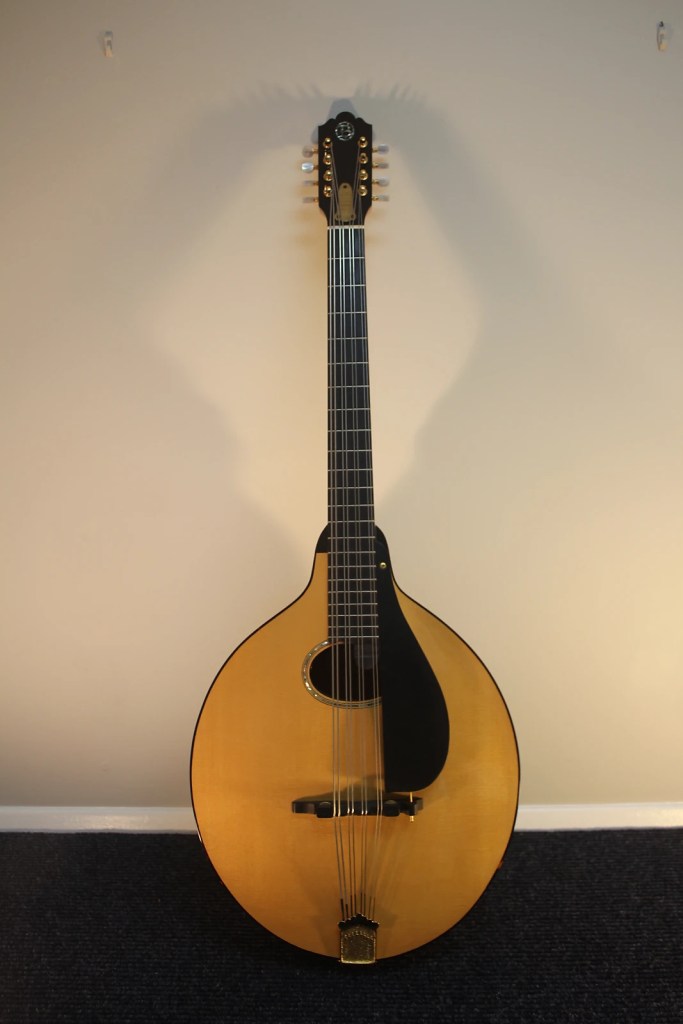
The mandocello is a versatile instrument, often used to provide a bass line or to play melody lines in the lower register. It can be heard in all manner of music, from bluegrass and folk to country and beyond. Its ability to blend with other instruments only adds to its value and charm.
Mandobass
The mandobass is a large, four-stringed instrument that is similar in design to a mandolin or mandola, but with a much deeper, more resonant sound. Mandobasses are often used to provide a low-end foundation in ensembles that feature mandolins and mandolas, and are also sometimes used as a solo instrument. Mandobasses are tuned EADG, low to high, just like a bass guitar.
Mandobasses are typically plucked with the fingers, using techniques similar to those used on a guitar or bass. They are commonly used in classical, jazz, and bluegrass music and are generally much larger and heavier than other mandolin-family instruments. This impressive instrument is so grand in size that it often cannot be held in the lap, but rather must be supported on a spike that rests upon the floor. With a neck-scale length similar to that of a standard orchestral double bass viol – a whopping 43 inches – the mandobass boasts a rich, full sound that is perfect for filling out the lower end of an ensemble. The entire instrument can be around 62 inches long. They are also heavier than other mandolin-family instruments, weighing around 8-12 pounds.

One of the main benefits of the mandobass is its ability to add a rich, full sound to an ensemble, filling out the lower end of the tonal range and providing a strong foundation for the other instruments. They can also be played as a solo instrument, using a variety of plucking and fingerpicking techniques to create a wide range of musical expression.
Overall, the mandobass is a versatile and dynamic instrument that can add depth and character to any musical performance. Whether played as part of an ensemble or as a solo instrument, the mandobass is a unique and expressive addition to any musician’s arsenal.
Electric Mandolins
Electric mandolins, or e-mandolins, are a truly extraordinary invention, blending the timeless sound of the mandolin with the modern technology of electric amplification. These sleek instruments boast a solid body, much like that of an electric guitar, and a neck complete with frets, allowing for precise finger placement and a wide range of musical expression.
But the true magic of electric mandolins lies in their ability to be plugged into an amplifier, whether it be a guitar amp or a mandolin-specific one. This allows musicians to crank up the volume and experiment with a myriad of tonal qualities, from crisp and bright to warm and mellow.
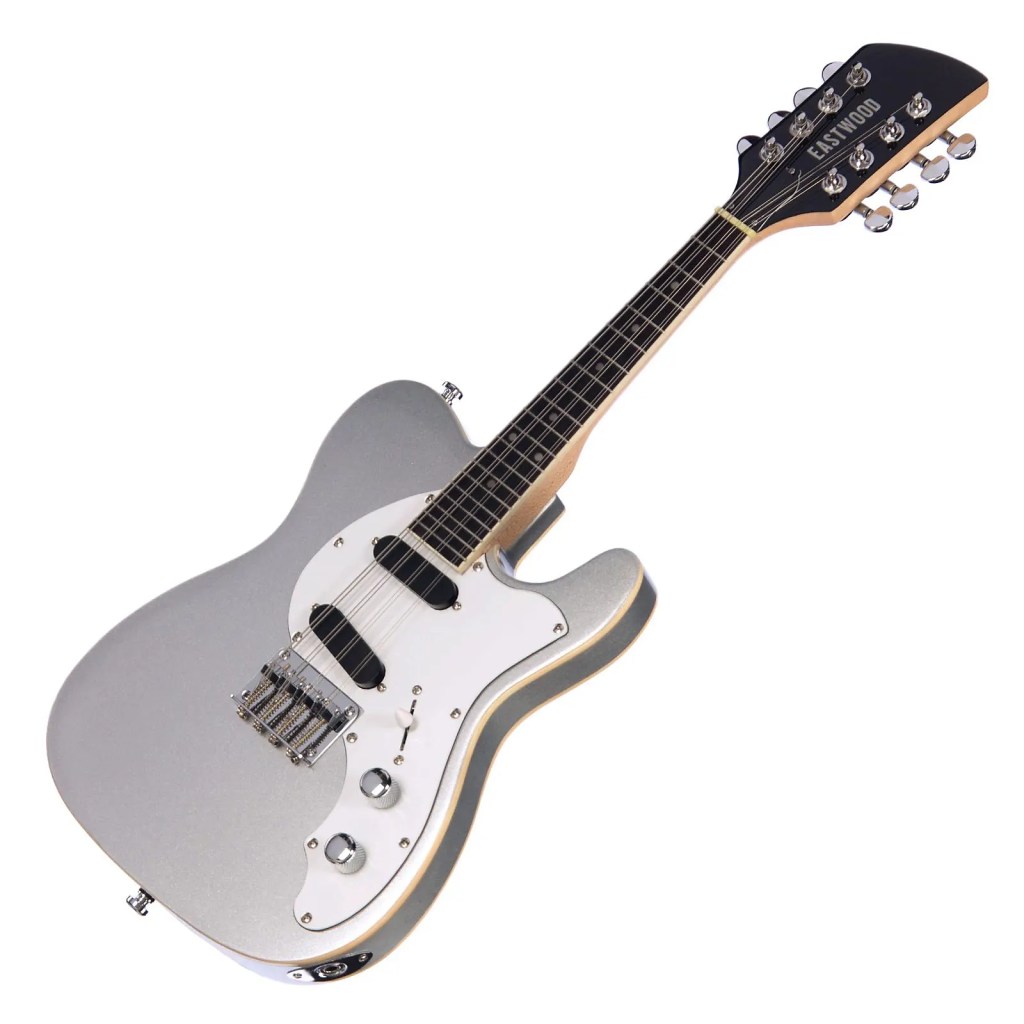
And let’s not forget about pedals! Just like electric guitars, electric mandolins can be paired with a variety of stompboxes and pedals to further customize and enhance their sound. Overdrive, distortion, and wah are just a few examples of the endless possibilities available to the electric mandolin player.
In short, electric mandolins are a versatile and dynamic instrument, perfect for adding depth and character to any musical performance, whether it be live or in the studio. So go ahead, plug in and let your mandolin soar.
In conclusion, mandolins, mandolas, mandocellos, mandobasses, and electric mandolins are all popular stringed instruments that offer their own unique qualities and characteristics. Mandolins are small and have a bright, punchy sound, making them well-suited for bluegrass and folk music. Mandolas are slightly larger than mandolins and have a deeper, more mellow sound, making them ideal for classical and jazz music. Mandocellos are larger still and have a rich, full sound, making them suitable for a wide range of musical styles. Mandobasses, the largest of the four, have a deep, resonant sound that is well-suited for a variety of musical styles.
Electric mandolins, on the other hand, offer the added versatility of being able to be amplified through an electric pickup system. They can produce a wide range of tonal qualities and can be played at a variety of volumes, making them suitable for both live performances and recording sessions. Electric mandolins are often used in rock, blues, and jazz music, and can be played through a guitar amp or a mandolin amp.
Overall, each of these instruments has its own unique sound and is suitable for different musical styles and preferences. It is important for musicians to carefully consider their needs and preferences when selecting a mandolin, mandola, mandocello, mandobass, or electric mandolin, as the type of instrument they choose can have a significant impact on their playing experience and overall sound.
 MandoZen